
Finding Apache Junction Residents
Start with the fact already in hand. A street address leads first to the city GIS map. The same address also matches the Pinal County parcel roll. A name points toward the assessor, the recorded-document index, and the court search. Public business filings help too. Older names and addresses belong in newspaper archives, vital indexes, and regional directories. The city straddles Pinal and Maricopa counties. The parcel's location decides which county office keeps the land record.
No official source lists everyone under one roof. Property systems name owners, not occupants. Arizona's voter tool lets a voter confirm a personal registration. It is not a public roster for browsing the block. Court and deed indexes capture a legal event. Printed directories and newspapers preserve a dated local presence. Treat the Apache Junction residents directory as a chain of evidence. When names repeat, back each link with a second independent source.
- Validate the address and county, then capture the assessor parcel number, or APN.
- Search the county assessor by owner or property address.
- Carry the owner name and legal description into the recorder index.
- Check court, city, business, or vital sources that fit the question.
- Ask the correct clerk, library, or archive when the online trail stops.
An address-first walkthrough continues in the Apache Junction street directory, which follows the parcel and deed chain without treating ownership as proof of occupancy.
Apache Junction Records Custodians
Custody follows the record type. The Apache Junction City Clerk keeps general city files. These cover council material, ordinances, board rosters, contracts, and specified license records. Municipal Court holds its own case files. Most parcel, deed, probate, marriage, divorce, and superior-court material sits with Pinal County offices. Any request should name the department. It should also give the person or address, the record type, and the date span. Arizona Public Records Law allows inspection during office hours and requires a prompt response. However, it sets no single deadline that fits every request.
Apache Junction City Clerk
300 E. Superstition Boulevard
Apache Junction, AZ 85119
480-982-8002
Pinal Superior Court Clerk
575 N. Idaho Road, Suite 109
Apache Junction, AZ
480-982-4166
Pinal court and probate files
Apache Junction Public Library
1177 N. Idaho Road
Apache Junction, AZ 85119
480-474-8555
Newspapers and genealogy help
Recorded instruments older than the web index still move on paper. The Pinal County Recorder takes counter requests at 31 N. Pinal Street, Building E, in Florence. Mail requests go to PO Box 848, Florence, AZ 85132. That offline route matters for Apache Junction deed research.
Apache Junction Parcel Record Searches
The Pinal County Assessor Parcel Search is the best first roll for most Apache Junction addresses. It offers six separate search routes, so one empty field never ends the effort. Owner names must be entered last name first. The address fields split the number, direction, street name, and suffix. Parcel, subdivision, public-land survey, and recorded-plat fields are each present. Each gives another way to reach the same land.
| Search route | Fields to enter | Best use |
|---|---|---|
| Owner | Last name, then first name | Find parcels tied to one recorded owner |
| Property address | Number, direction, name, suffix | Resolve one current situs address |
| Parcel number | Book, map, parcel, suffix | Carry an exact APN between systems |
| Subdivision | Subdivision name | Browse a named development |
| Survey | Section, township, range | Locate land by public survey |
| Recorded plat | Cabinet, slide, lot | Match a lot to its plat reference |
The official Assessor interface shows how Apache Junction residents directory work turns a loose clue into an exact parcel.
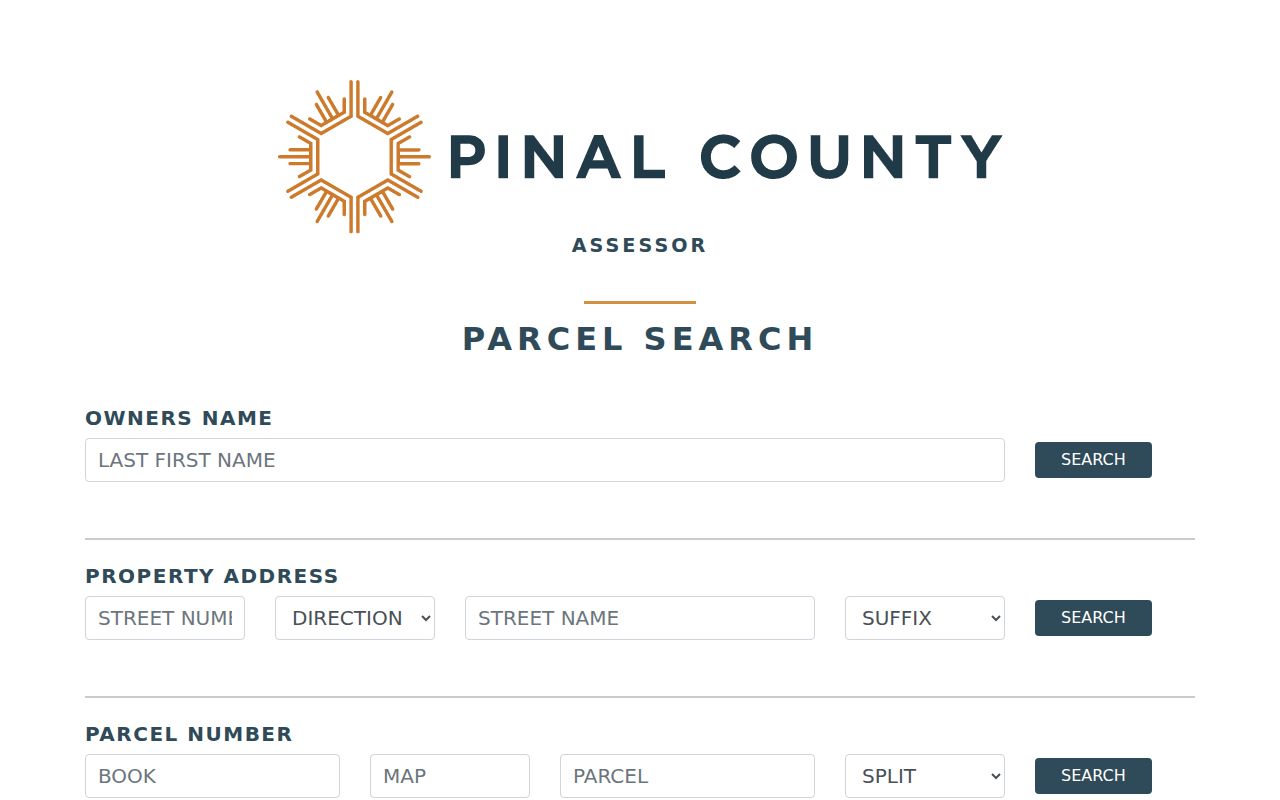
The Assessor's search page lays out owner, address, parcel, subdivision, survey, and plat searches as separate paths. Save the APN and legal description before moving on to tax or deed records.
Apache Junction Resident Ownership Limits
Read any parcel result carefully. The assessor names the owner of record plus the physical property address. That address is often called the situs address. The Pinal Treasurer adds the tax-bill mailing destination and refreshes its inquiry nightly. A mailing address elsewhere can signal an absentee owner, a trust, or a business. It may just mark a preferred mailbox. None of it names the person actually sleeping there.
That gap matters in Apache Junction. A city dwelling survey covered surveyed units. Nearly two-thirds were manufactured or mobile homes, park models, or recreational vehicles. A parcel can identify the park or landowner. The seasonal occupant surfaces only in a dated directory, a newspaper item, a mail source, or a private association record. Property rolls are precise about ownership. Yet they are not a complete Apache Junction residents directory.
- Parcel
- A legally tracked piece of land with its own assessor number.
- Situs address
- The physical location of the parcel, distinct from the owner's mailing address.
- Index
- A finding aid that points to a record; it is not always the full document.
- Criss-cross directory
- A historical volume arranged by address or phone so a place can lead to a name.
Note: Ownership and occupancy are different facts, so never treat an assessor result as a full household roster.
Apache Junction Resident Deed Trails
The Pinal County Recorder indexes deeds, deeds of trust, releases, liens, plats, and other instruments by party and land clues. Online coverage begins May 23, 1980. Search the current owner as grantee, the buyer or recipient. Then match the legal description exactly. Note the seller, document number, instrument type, and date. Repeating those steps walks an Apache Junction ownership chain backward, deed by deed.
Online PDFs are unofficial watermarked copies. A plain recorded copy costs $1 per page, and certification adds $3 per document. Orders go through the web, email, mail, or the Florence counter. Instruments predating the online cutoff need staff help with deed books, microfilm, or archives. Start from the current deed's grantor and legal description. An empty web result never proves the deed does not exist.
Keep the legal description. A lot, block, subdivision, or other legal description remains the continuity key when street labels or mailing details change.
Apache Junction Court Record Checks
Arizona runs a free public case lookup spanning most of its courts, refreshed weekly. A search there can return a case number, the court, the case type, the filing date, party roles, the disposition, the judge, and the docket of events. Treat it as a pointer, not the file itself. Sealed cases never appear. So are protective orders, probate, mental-health matters, victim or witness data, most juvenile delinquency material, and local-ordinance charges.
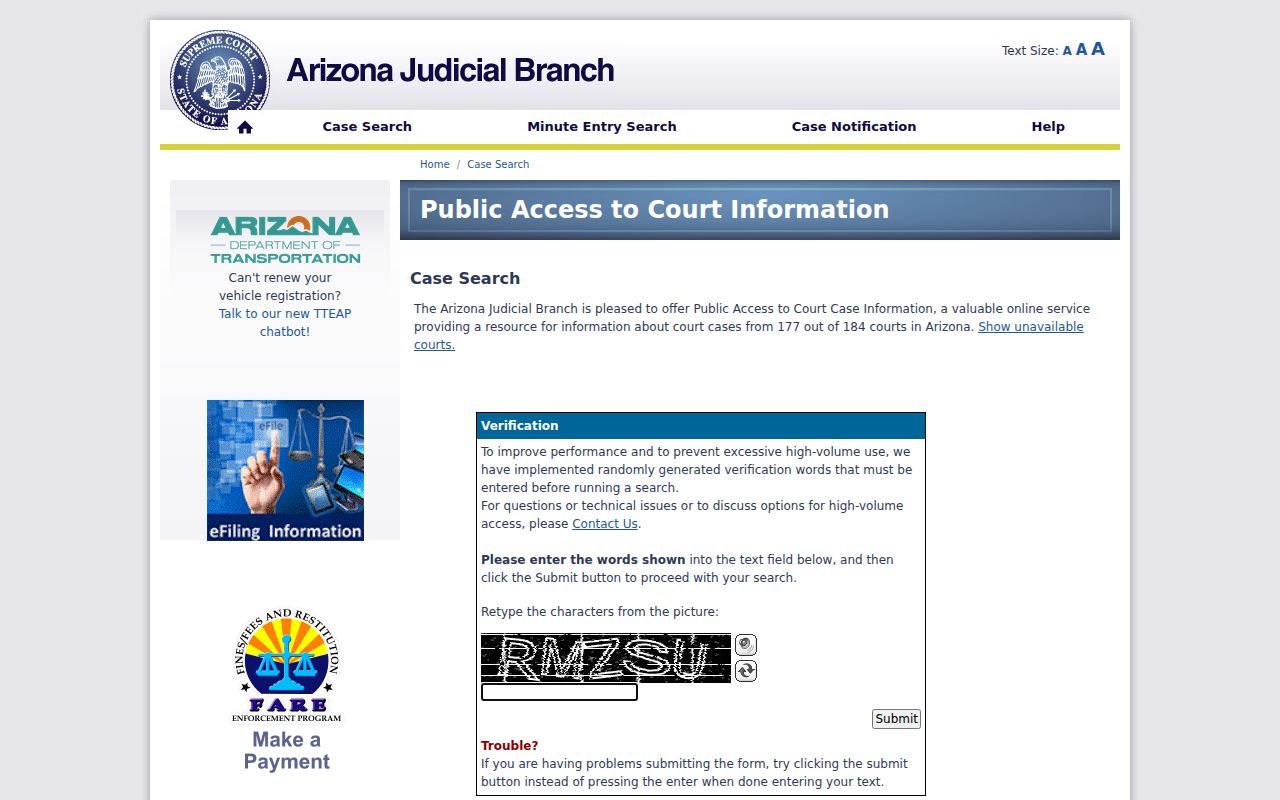
That statewide search is wide but shallow. It shows names, not certainty. Confirm any match directly with the Apache Junction Municipal Court, Justice Court precinct six, or the Pinal Superior Court clerk before assuming you have the right person.
For actual documents, Arizona eAccess offers eligible Superior Court civil and criminal filings dated July 1, 2010 and later. Registration is required, and documents or subscriptions carry fees.
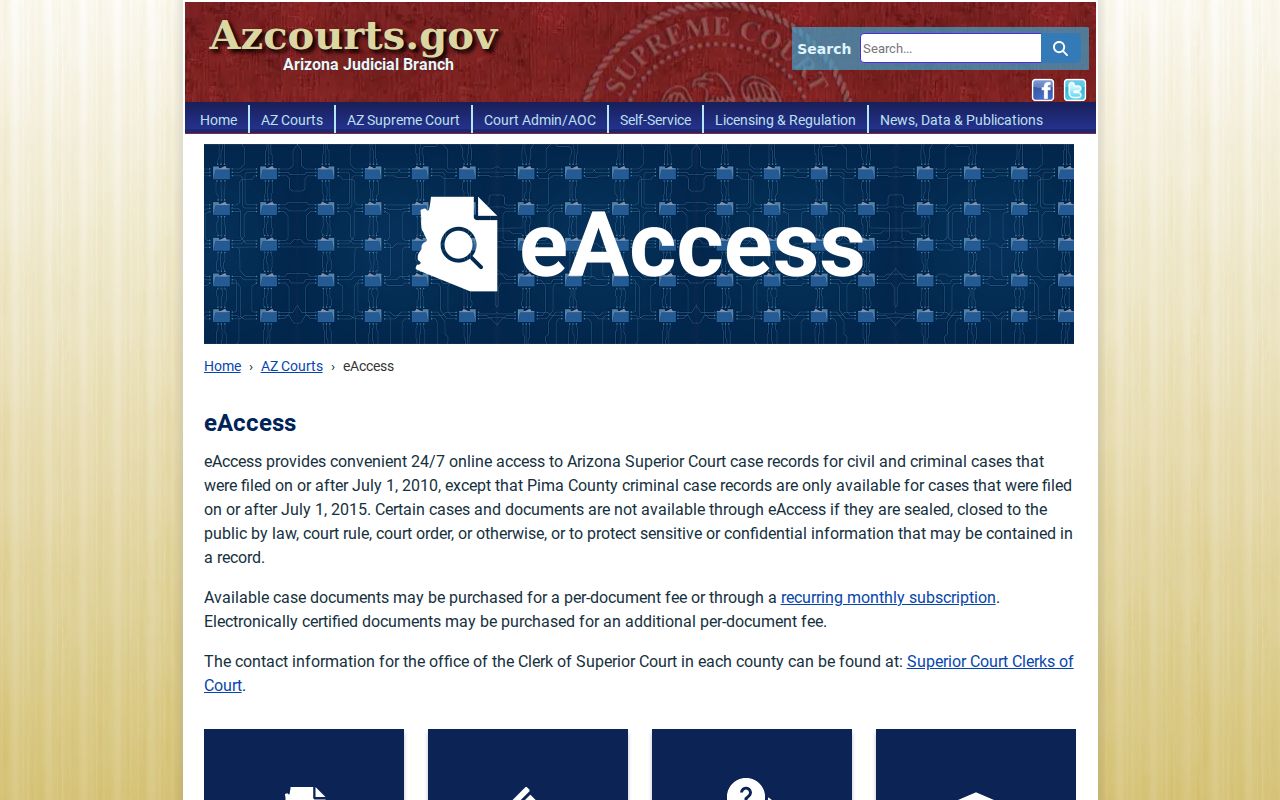
The eAccess split is simple to grasp. The free index tells you a case exists; the documents behind it cost money. For certified copies, older files, or anything the portal lacks, the local clerk stays the custodian of record.
| Channel | What it supplies | Main limit |
|---|---|---|
| Public Access | Free statewide case and docket clues | Not official and excludes protected classes |
| eAccess | Eligible Superior Court document images | Registration, fees, and a filing-date cutoff |
| Court clerk | Official file, copies, and archive guidance | Retrieval and copy rules vary by file |
Current Apache Junction Directory Sources
No single current Apache Junction residents directory lists every household. That is the honest starting point. Each official roll answers a narrower question, and each custodian sets its own access rules. Property and recorded-document indexes sit open online. The voter self-service system confirms only a requester's own file. City and chamber directories list public or organizational roles rather than private residents.
| Resident clue | People or links shown | Keeper | Access path |
|---|---|---|---|
| Parcel and tax roll | Recorded owners and mailing clues | Pinal Assessor and Treasurer | Free online search |
| Recorded instruments | Parties to deeds, liens, and releases | Pinal Recorder | Web index, mail, or counter |
| Voter registration | One voter's status and districts | Arizona and Pinal Elections | Identity-based self-lookup |
| City staff directory | Employees, titles, and public contacts | City of Apache Junction | Name and category search |
| Chamber directory | Organizations and public-facing contacts | Apache Junction Area Chamber | Keyword, category, ZIP, alphabet |
The Apache Junction staff directory lets you search by category, first name, or last name. A result can include the employee's name, title, public email, and a direct or main phone number.
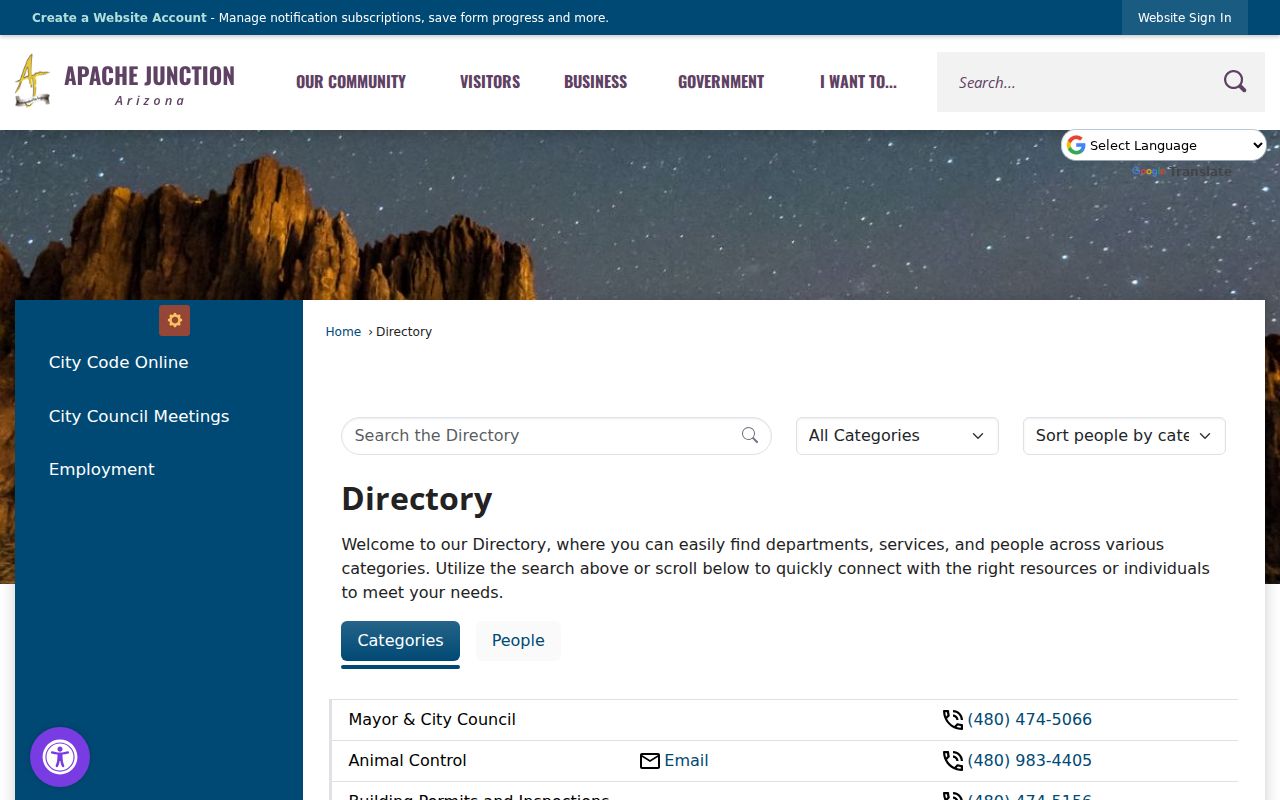
Use it to find the right public contact, not a home address.
Apache Junction Voter Record Privacy
Arizona's Voter Information Portal serves the voter, not the curious neighbor. Through it, a resident can review registration status, election districts, notices, ballot-by-mail status, and voting history. It is not an open Apache Junction neighbor search. State law permits voter-list inspection only for political, election, redistricting, or other uses the statute names. Commercial use and Internet reposting are prohibited.
Even an authorized list holds back plenty. The month and day of birth, Social Security information, driver or state ID number, tribal census number, parental identifiers, signature, and email all stay sealed. Email cannot be released for any purpose. Participation history shows only that a person voted, never the marked ballot. Protected people and Address Confidentiality Program participants can have identifying details sealed entirely. Inactive status, likewise, proves nothing about whether someone moved.
Use resident records lawfully. Do not use directory clues to stalk, harass, threaten, or expose a protected address.
Apache Junction Archive Records
City records took a leap in 2025. Apache Junction launched an online archive stretching back to incorporation in 1978. It opens with council minutes, ordinances, resolutions, and proclamations. These files can carry the names of officials, applicants, appointees, speakers, and honorees. They also name anyone else tied to public city business. More categories are planned. The Apache Junction public records archive is the entry point.
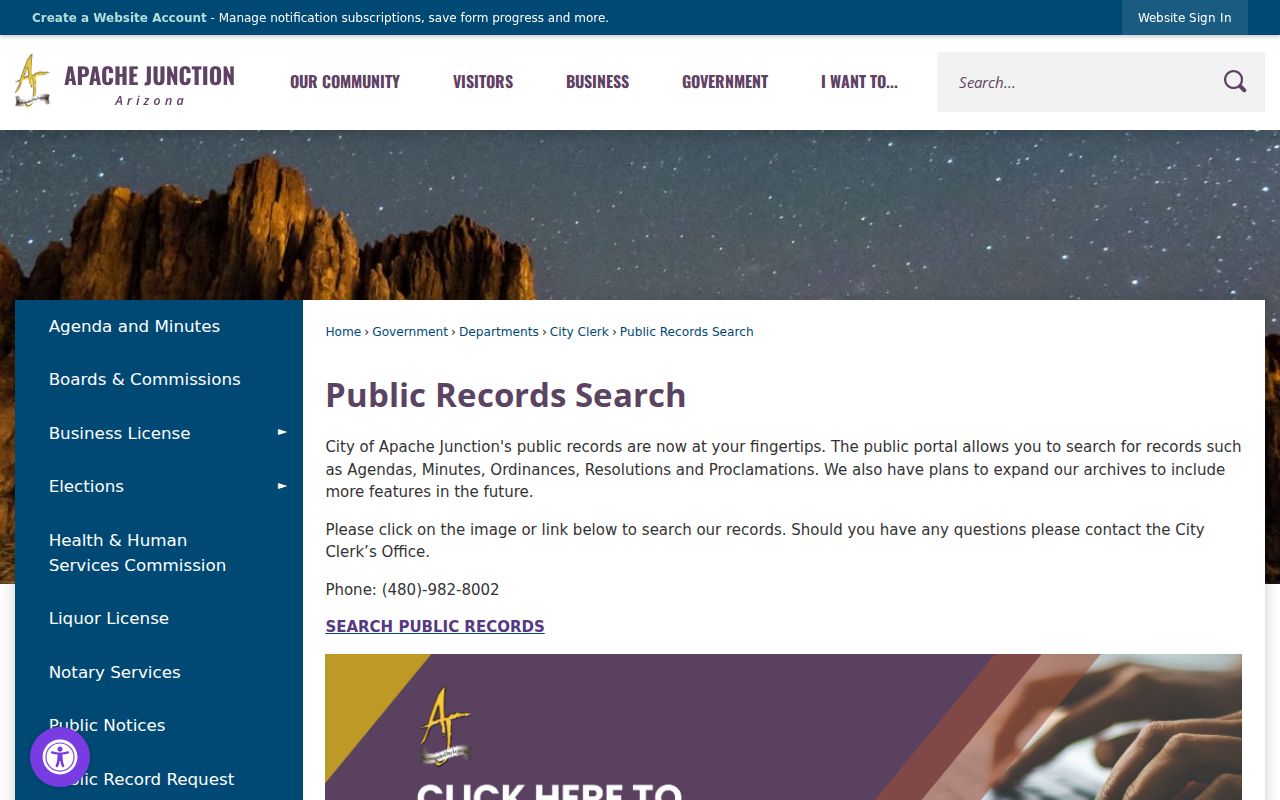
The official landing page confirms the city-level digital trail. The older Archive Center still supports category, keyword, time-period, and date-range searching. Coverage runs across boards, commissions, council files, and campaign-finance records. The expansion continues, so search both systems. Then ask the City Clerk for anything still missing.
Dates shape the hunt. Apache Junction incorporated on November 24, 1978, after seven failed attempts. A special census in 1979 counted 10,151 people. The 1970 federal count had logged just 2,390. Municipal records are meaningful only from incorporation onward. Earlier Apache Junction names, parcels, and public events live elsewhere. They sit in Pinal County deeds, tax records, court and election material, federal census schedules, and newspaper collections. The right repository shifts with the era, not just the record type.
Apache Junction Business Record Connections
A public business record can separate two people who share a name. It can also tie one person to a known organization. Arizona divides the custody. Corporations and limited liability companies answer to the Arizona Corporation Commission. The Secretary of State keeps trade names, trademarks, partnerships, UCC filings, and notaries. Professional credentials route to whichever board regulates the field. A business or statutory-agent address may be an office, mailing point, or service address. Never call it a home.
The Arizona Corporation Commission entity search accepts entity, statutory-agent, and principal details. It includes a Pinal County filter.

This gives the Apache Junction residents directory workflow a built-in affiliation step. Check entity status, addresses, agent role, and filing dates together rather than trusting a name alone.
Apache Junction Historical Vital Records
Arizona moves birth certificates into public archive access 75 years after birth. Death certificates open 50 years after death. That rolling rule builds a dependable genealogy channel while shielding newer records. The Arizona Department of Health Services genealogy portal currently states birth coverage from 1855 through 1945. Its death coverage runs from 1870 through 1970. Public images are not certified copies. The ADHS historical genealogy search provides the index and images.
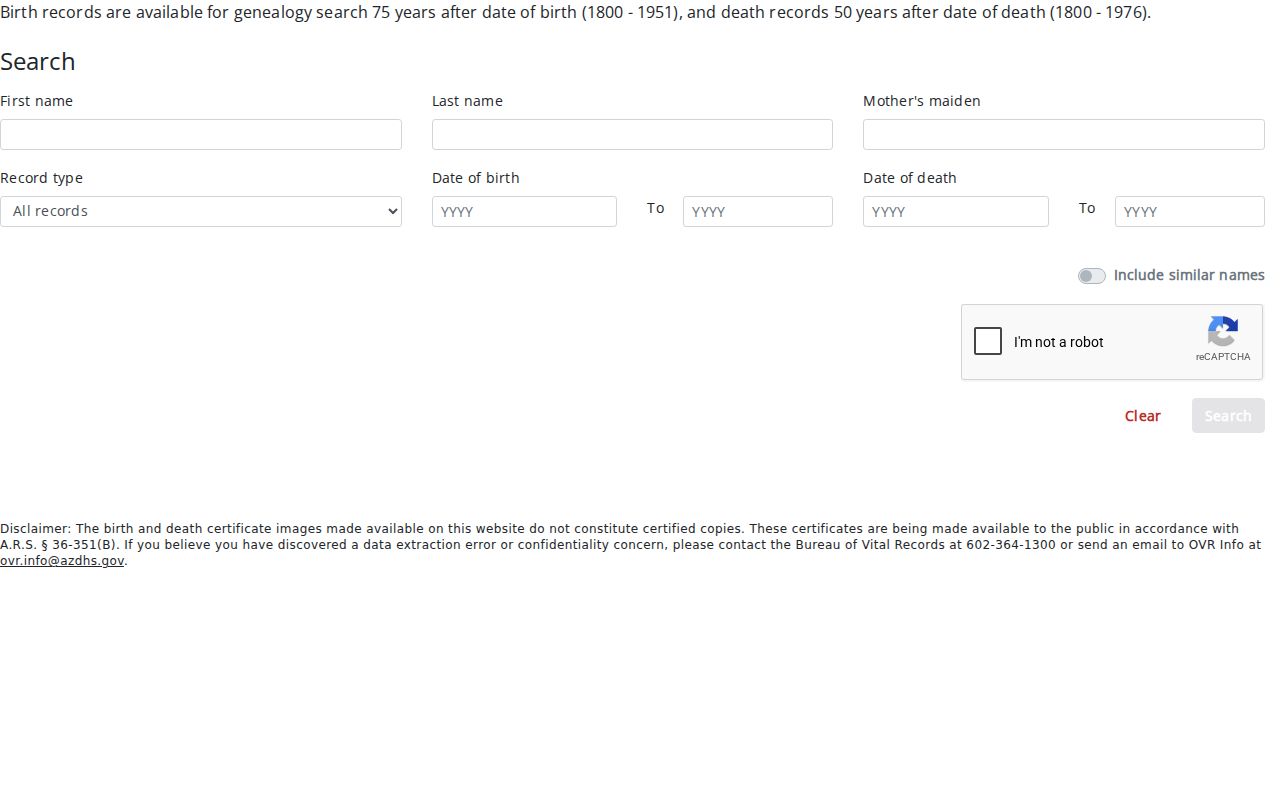
The state search opens a name-based path into old identity records. It stops there. Certified current birth and death copies stay eligibility-controlled, while marriage licenses and divorce decrees belong with the Pinal Superior Court clerk, not ADHS.
Apache Junction Obituary Record Research
Newspaper obituaries fill a gap that parcel rolls and court files cannot. The Apache Junction Public Library holds local papers from 1960 onward. Give staff a first and last name. Ideally add the month and year of death. The library genealogy and obituary guidance explains the service and access options. Ordinary email reference takes about three working days. Obituary searches can stretch to a week when demand is heavy.
Obituaries often name relatives, former addresses, clubs, and burial clues. That makes them strong leads for a residents directory search. Still, confirm each fact against a vital, probate, or land record before relying on it.
Older Apache Junction Resident Directories
Apache Junction shows up in regional volumes long before the city incorporated in 1978. A 1958 Mullin-Kille regional directory includes it. So does a 1962 Cole's volume. It is arranged as a criss-cross. Addresses come first and subscribers follow. That address-first layout can tie a historical street to the householder listed there. Remember, a directory is a dated publication, not a census of everyone present.
Before incorporation, most official evidence sits with Pinal County rather than a city office. Territorial, mining, federal-land, census, and newspaper collections also hold material. The place name itself shifted over time. Early research may require several search terms. These include Youngsberg, Youngsberg Junction, Apache Trail, Goldfield, or Pinal County. Entry points come from the Apache Junction Public Library and Arizona Memory. The Apache Junction city directory collection covers the full shelf and reading method.
Road history adds another key. A route built from Mesa in 1905 for Roosevelt Dam construction became the Apache Trail. That came after Theodore Roosevelt traveled it for the 1911 dedication. A highway toward Superior and Globe followed in 1922. The junction itself gave the community its lasting name. George Cleveland Curtis homesteaded nearby in 1923 and built the Apache Junction Inn. After World War II, winter visitors, residences, and RV parks reshaped the local population. Older advertisements cluster along Apache Trail. Later records reflect US 60 moving south in the early 1990s. Place names and road context catch records a city-only query would miss.
Together these clues turn a thin residents directory trail into a workable one. Each era leaves a different paper trail. Match the era to the custodian and the search narrows fast.
Apache Junction Records Fallbacks
A failed portal is a routing signal, not a dead end. Recorder records before the online cutoff move to staff. Others go to the Florence counter, mail, microfilm, or older deed books. A court result that is missing, sealed, or too old belongs with the clerk of the court. That is where it was filed. City documents outside both archives should go to the City Clerk. Some belong with the separate municipal court or police custodian. Historical names route to the library, State Archives, Arizona Memory, or FamilySearch.
Arizona Public Records Law lets anyone inspect open records during office hours. Inspection is free. Noncommercial copies may carry reproduction and postage charges, and commercial-purpose requests follow distinct rules. Agencies must respond promptly. Volume, redaction, complexity, and storage location all affect timing. State archives staff can also route records transferred from an agency.
Official rolls offer known custody, stated coverage, and a path to certified copies. Commercial people-finder sites may blend stale or mismatched data. Many charge recurring fees. Treat them as leads at most. For Apache Junction resident research, the custodian's record should control.
Protected Apache Junction Resident Addresses
Arizona's Address Confidentiality Program gives eligible relocated victims a substitute address. Mail forwarding runs through the Secretary of State. State and local agencies generally accept that substitute for new public records. Election officials keep the actual location confidential while assigning the correct precinct. Real-property instruments need a separate county-record procedure. Enrollment does not automatically rewrite every old deed or web page.
Other laws restrict voter identifying details, crime-victim locating information, utility customer data, and motor-vehicle records. Redaction or a blank portal field does not mean the custodian lacks the information. It means access may yield to a safety rule. A privacy statute, court order, or case-specific review can also limit it. Never treat the Apache Junction residents directory as a tool for bypassing those protections.
Note: Verify a public record with its custodian. Stop when a lawful safety or confidentiality boundary blocks disclosure.